
Marchés Alimentaires
Paris's Food Markets Keep It Together

A “marché alimentaire,” or food market, in Paris is a never-ending source of inspiration. Just the fact that food markets exist and are so well organized, in the best French way, is miraculous. Each arrondissement has its markets on a regular schedule, and each is unique to its neighborhood. They divert traffic, make noise, emit incredible aromas, and generally charge-up the atmosphere. Vendors may come and go, they may be absent from time to time, but you can count on a marché alimentaire the way you count on your best friend.
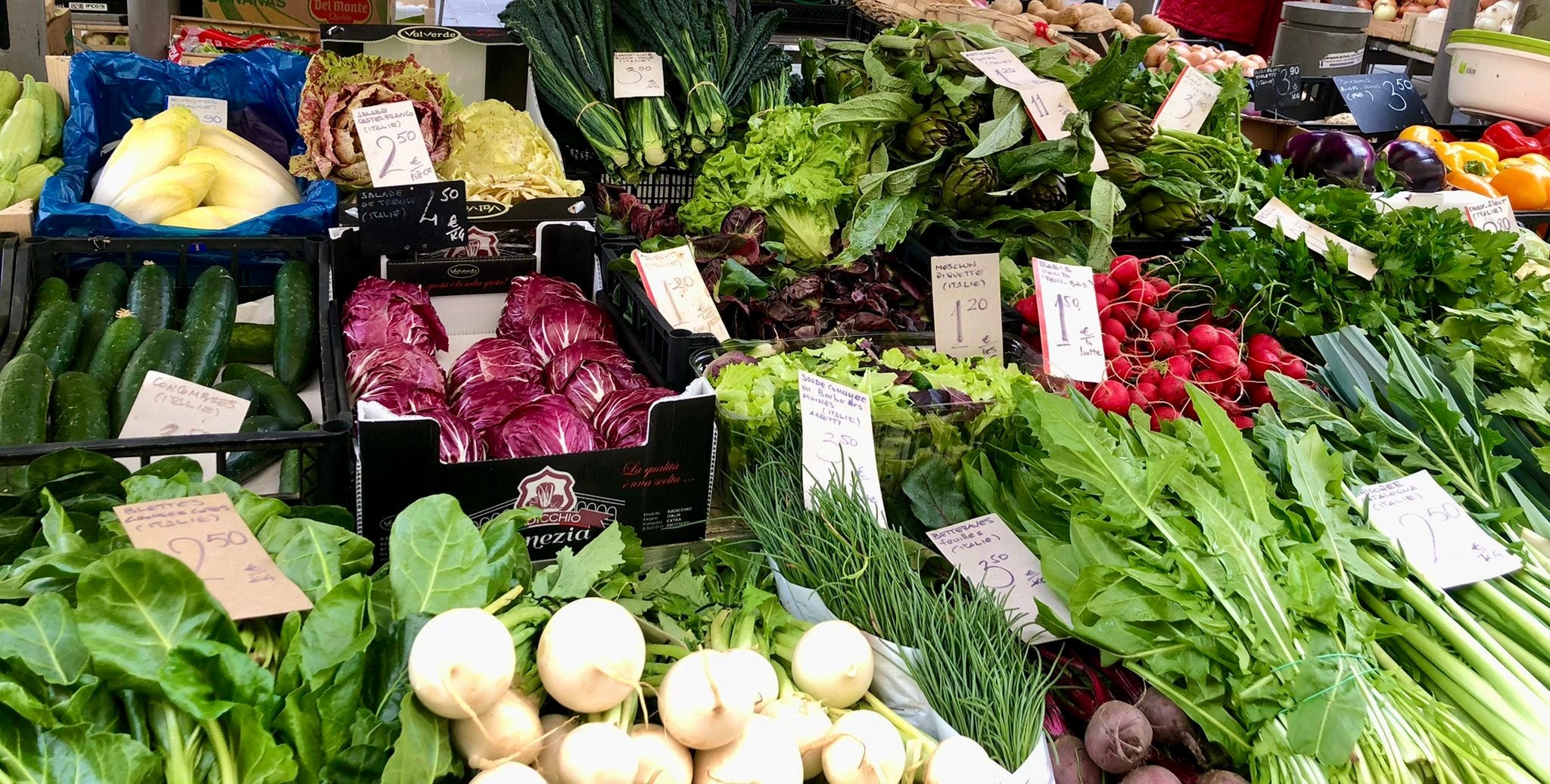
When I get to mine very early, the oyster grower/cattle farmer is already joking with the organic baker/philosopher, both tousled but already brilliant. The cheesemonger is keeping himself upright by leaning against a wall, warming his hands over a small express and commiserating with the fishmonger; and the Thai street food chefs seem to have been awake since time began, as their multitude of pots bubble and steam, sending sweet, coconutty aromas into the air. They let no one buy anything at this early hour though; the dishes aren’t finished so if you want your shrimp and coconut soup, you have to return for it.
I make my way through the market, which changes every time I go, with the seasons and the producers. The honey producer comes every other week from Provence; the walnut producer from Grenoble just once a month; the scallop fisher and his wife from the Cotentin just on Sundays during the cold months. The flower vendor, who specializes in flowers from the Ile de France and Provence (ie. local), is there except for the month of January. When there are few local flowers he extends his borders to Holland or he would have nothing to sell; it’s about a four-hour journey by car, so allowed.
I go early because certain things are available in limited quantity, like the farm-fresh eggs I get from Farmer Paul and I count on for my life; his mâche goes fast too, and as the seasons change it might be his strawberries, radishes, or the figs that fatten on his trees.
I want to get one of everything, everywhere, and sometimes it seems I do, as I roll my overflowing basket over the cobbles to home. Once inside the door, my real job begins. Of course I must store everything; more on that later. But now is the essential moment, as I muse over what I will do with all this wealth from land and sea.
It’s a near-sacred effort, because everything is the work of minds that thought and hands that planted, risked, dredged, swooped, trimmed, then packed it all up and drove it to market. With my choices I’ve entered into a holy contract to do the best with it I can. I’m aware that the contract is of my own making, but I take it seriously nonetheless.
Before I get too serious in my musing, I put away anything very perishable, like seafood or meat. Then, I make a bowl of strong coffee and set whatever pastry I’ve gotten from the baker’s stand on a plate. My purchase of a market breakfast pastry (or two) always comes with the baker’s question: “Qu’est-ce qui se passe aux Etats-Unis? » “What is happening in the USA?” as though I have inside knowledge and insight. The baker never disappoints me with the question; I’m sure I always disappoint him with my response.
I make sure to sit in a slit of sunshine in my apartment if there is one, with my back to the radiator if not, to think about and look at what I’ve purchased as I sip my coffee.
And so, this week there are Jerusalem artichokes, called topinambours after a Brazilian tribe who toured France at the same time this knobby root vegetable made its first appearance here in the mid-16th century. Both were curiosities, and somehow one gave its name to the other. (The tribe is now called Tupinambas).
This vegetable, which went in and out of fashion over the centuries, kept France alive during the World Wars. It is much reviled by an older generation, and much loved by everyone else because of its mellow, artichoke flavor. What to do with it? I’m thinking of a topinambour soup I had recently that defied the imagination; I’m pretty sure I can recreate it.
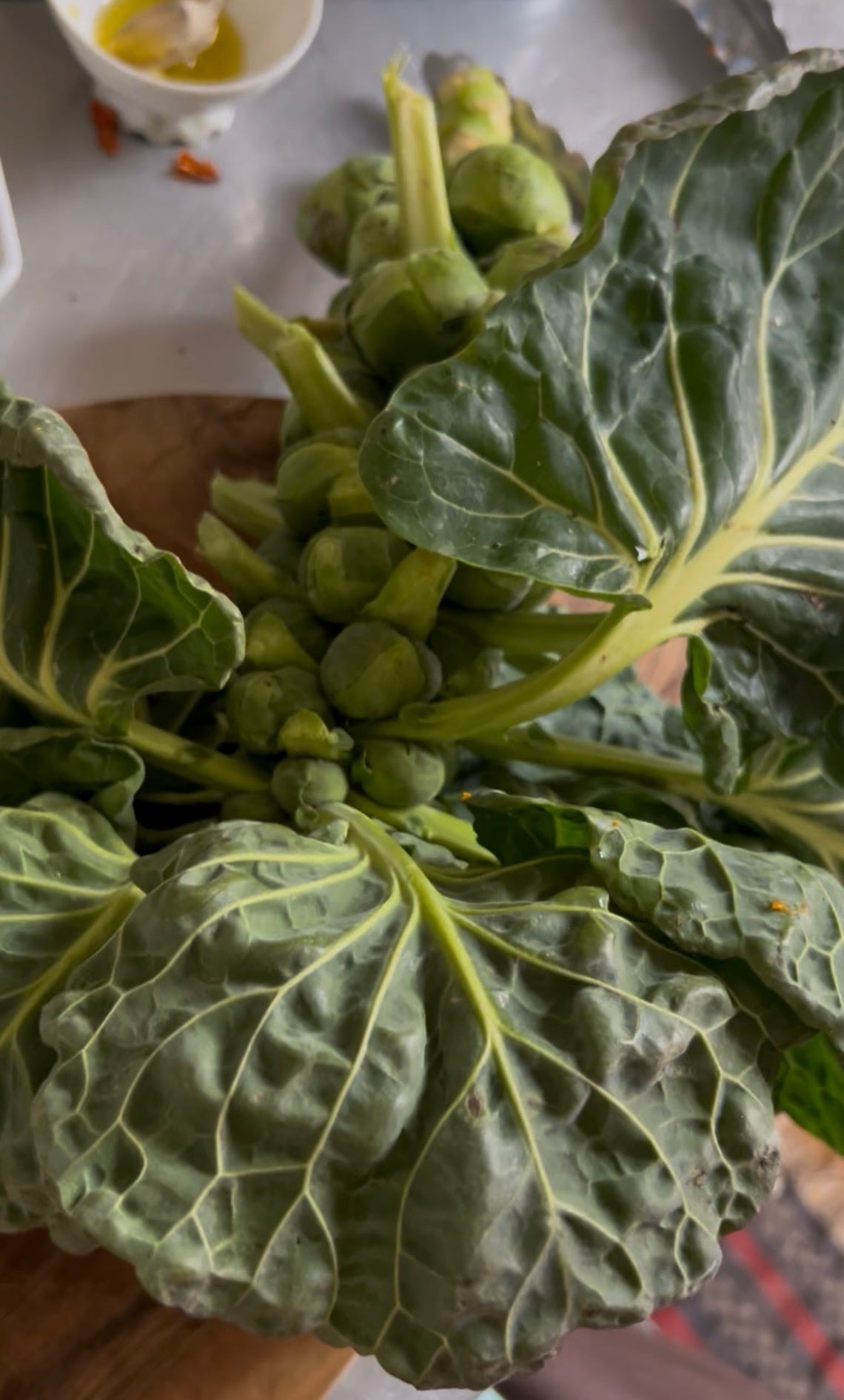
Lately, the organic grower from Normandy is selling Brussels sprouts on their stems, and I have one. They’re an esthetic marvel that I wish I could preserve; instead, I set them on the windowsill in the cold and pop off the sprouts as I need them. I like to roast them in goose fat with chunks of vivid orange potimarron squash that turns to chestnut flavored velvet in the oven. I consider serving this alongside the sea scallops I got from the fisher and his wife, or perhaps simply with a salad of mâche, anointed with olive oil and shallots.
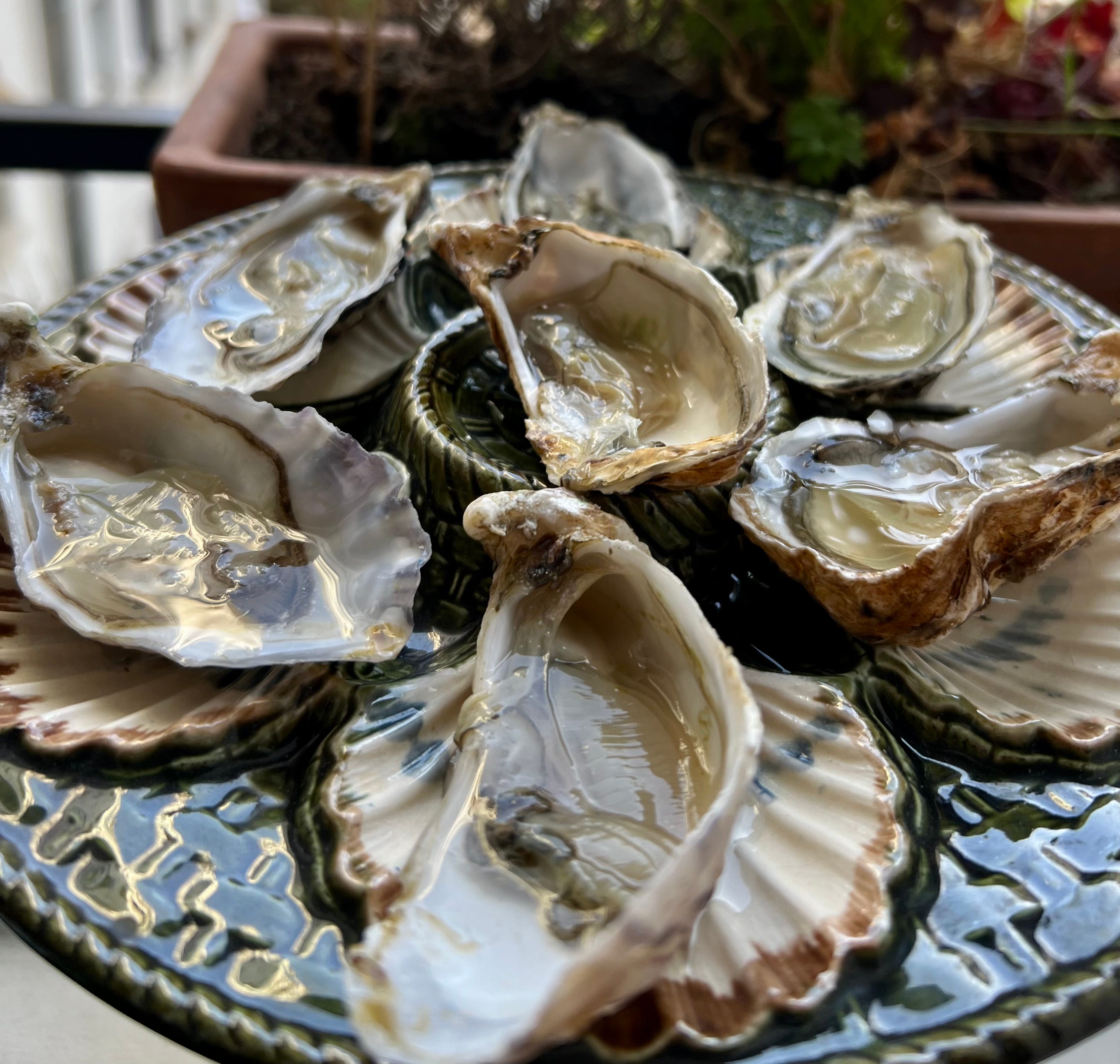
I have oysters from the oyster grower/cattle farmer, “treize la douzaine,” thirteen to the dozen. Each is a poem, like solid sea, requiring no embellishment. It does occur to me they might float well atop the soup, though. Or, I could grate the tangy purple radish from Farmer Paul, dress it in rice vinegar and put an oyster or two atop THAT.
Then there is the half guinea fowl to consider. Also from the Norman farmer, who tossed in the liver as a gift (first come, first served), I’ll surely roast it along with her potatoes and an apple or two from her orchard.
Dreaming post-market, hot coffee with a beautiful crema on top, a fresher than fresh pastry in my hand, is a moment when all else goes away. The peace and calm establishes more than my thoughts; it leaves whisps to soften the week as the roar of the news returns. The market exhibits culture, tradition, exchange, economics, wealth, abundance. The entire experience of the market, the doing, the dreaming, then the dreaming of doing make life stable and full.
France’s market system, for it exists country-wide in just about every village, town, and city, is a major facet of the country’s gift to the world. While spheres somewhere in political and geopolitical realms are filled with hands clasping and unclasping, the markets ensure that life and culture continue.
And after that, there is more: getting into the kitchen for the alchemy that turns it all into deliciousness.
More soon on storing the wealth from the market….
Warm wishes,

Seeing you describe sitting with your coffee, appreciating all your finds was so relaxing 😌
Beautifully described, as always. Counting my blessings to live a few steps from Les Halles and the twice weekly outdoor market here in Tours, in the heart of the Loire Valley, known as the Garden of France. You should come visit!