
Culinary Trends in Paris
And Hachis Parmentier

I gave a talk at the American Club of Paris last week, a vibrant organization if the attendees are any indication. My mandate was to speak of everything culinary in Paris and France, including trends I’ve noticed. Because there was such lively discussion during and after my talk, I thought I’d share some of my ideas from it here.
I was, to my delight, introduced as part of a triumvirate including Julia Child and Patricia Wells, both friends and colleagues. Like Julia, I’m classically trained in French cuisine; like Patricia, I’m a journalist. My focus and passion have always been people – those who produce and prepare food, those who come to my table to enjoy it.
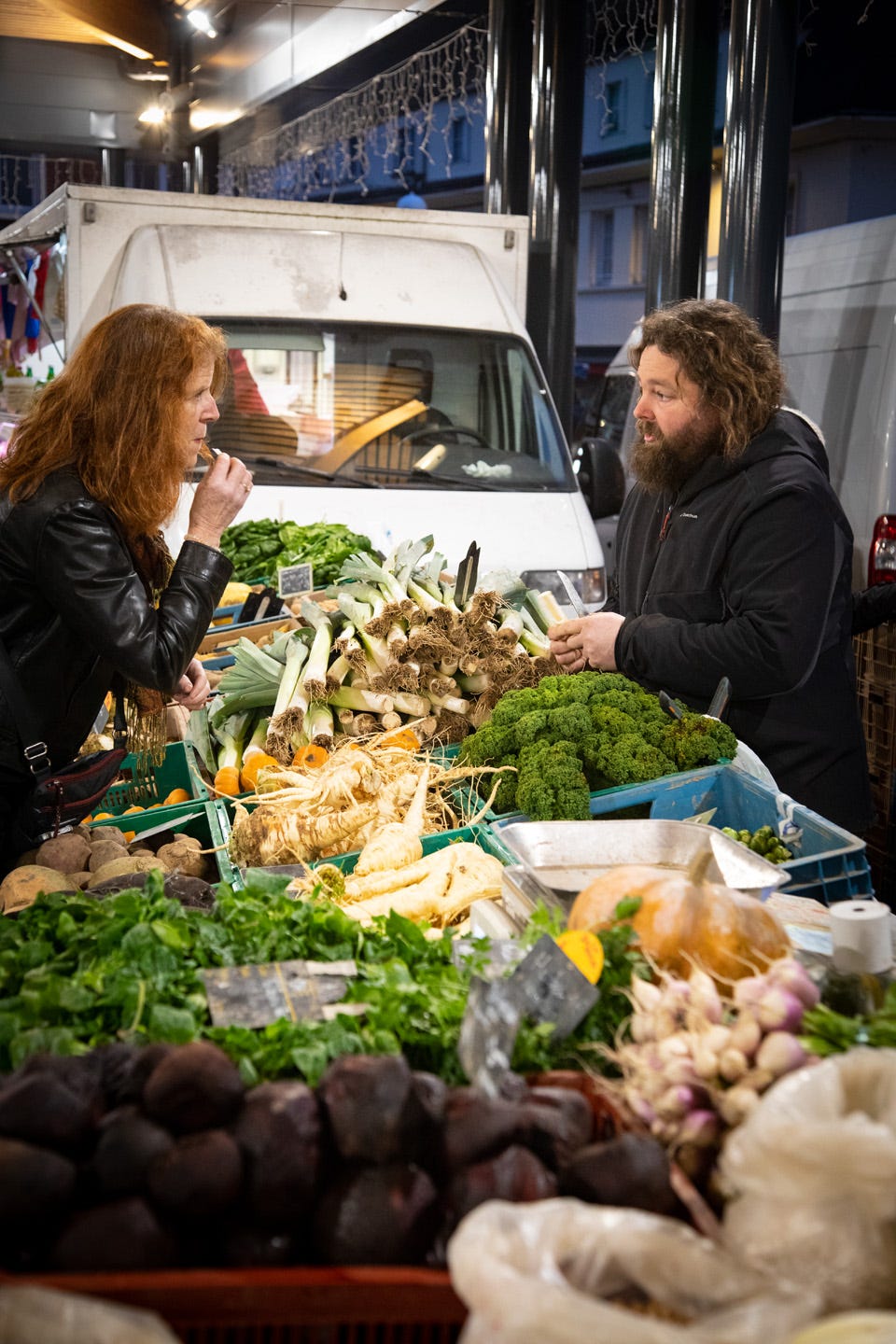
And so I began with politics of food, and found hearty understanding and agreement because, as I pointed out, it is so easy here to support food producers and kitchen artists because there are systems for doing so. For instance, I personally put my money in the hands of food producers two to three times a week, at my local market, and have the privilege of eating in restaurants where chefs do the same. This is why farming and rural life survive in France, even tenuously.
When it comes to trends, I preface my remarks in noting that I’m not a trend tracker. But I notice things. Call them trends, some are slow burners that become part of the culinary landscape here; few are flashes in the pan of gastronomic desire. The thing about French cuisine, which is based on rigorous technique and lengthy tradition, is that it can gracefully incorporate new influences and still retain its own, personal integrity.
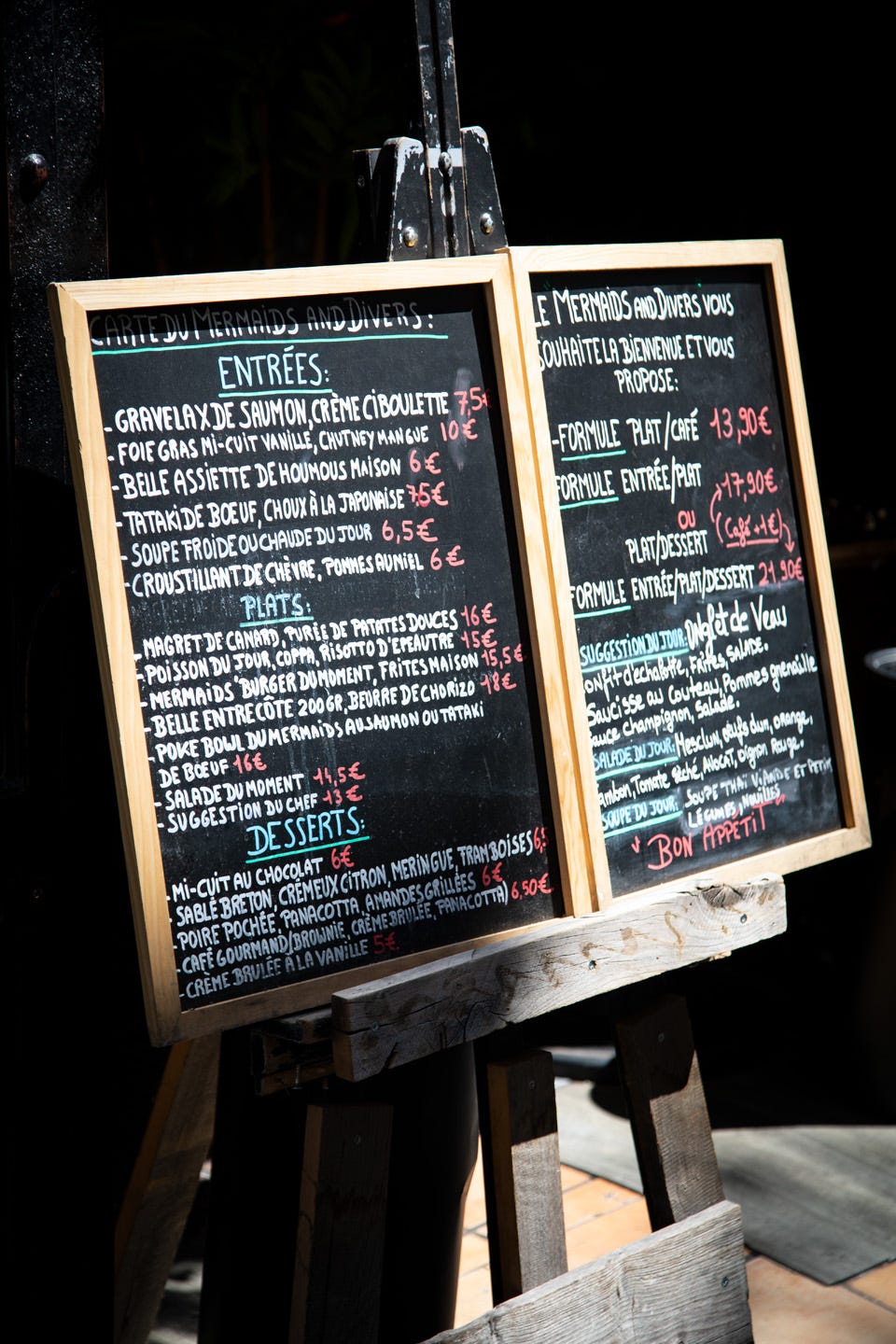
I offer here a short list of what I might call trends. They are new things, changes, evolutions in all things culinary here.
Changing Paris. When I arrived in the early 80’s and started cooking and researching here, Paris was so…French. Now, you can visit parts of the city and pretend you’re in New York, Casablanca, Istanbul, or Abidjan. Yet there is always immutably French Paris to return to.
Eating on the street. Absolutely impossible at one time, it is now common, most likely an import from the USA.
The hamburger. Another gift from across the Atlantic, it now risks replacing the Croque Monsieur as a café favorite.
The avocado. Always prized but once seasonally available, it is now a year-round staple. Mostly from Péru, its carbon footprint defies the imagination.
Doggie bags. Possibly against the law until a few years ago, now one can ask for leftovers to take home.
Alfalfa sprouts. Becoming a popular garnish.
Two seatings at a restaurant. Once, you rented your table for the night; now if you’re first seating, you must be prepared to skedaddle at 9:30
Shabby-chic dress among restaurant servers, including mussed hair. This replaces the “penguin” look of black jackets, long white aprons, and the good haircut.
Natural wines, including “pet-nat,” sparkling versions. Unpredictable and generally filled with fun, these are commonly defined as “wine made in the vineyard, not the laboratory”.
Orange wine, (skin-contact white wine). An exciting “new” offering attributed to the Republic of Georgia or perhaps even earlier, Arabia.
Bubble tea. Everywhere. Enough said.
Anglo-style coffee shops. They servie muffins, scones, carrot cake, and foamed milk drinks seasoned with coffee.
Cookies. The French version of the chocolate chip cookie
Chicken wings. They were thrown away by butchers until recently. Now they’re a commodity.
Radishes. Once tiny and red and white, now ever larger and of every hue, from red-centered watermelon radishes, to purple daikon.
Kale. Enough said.
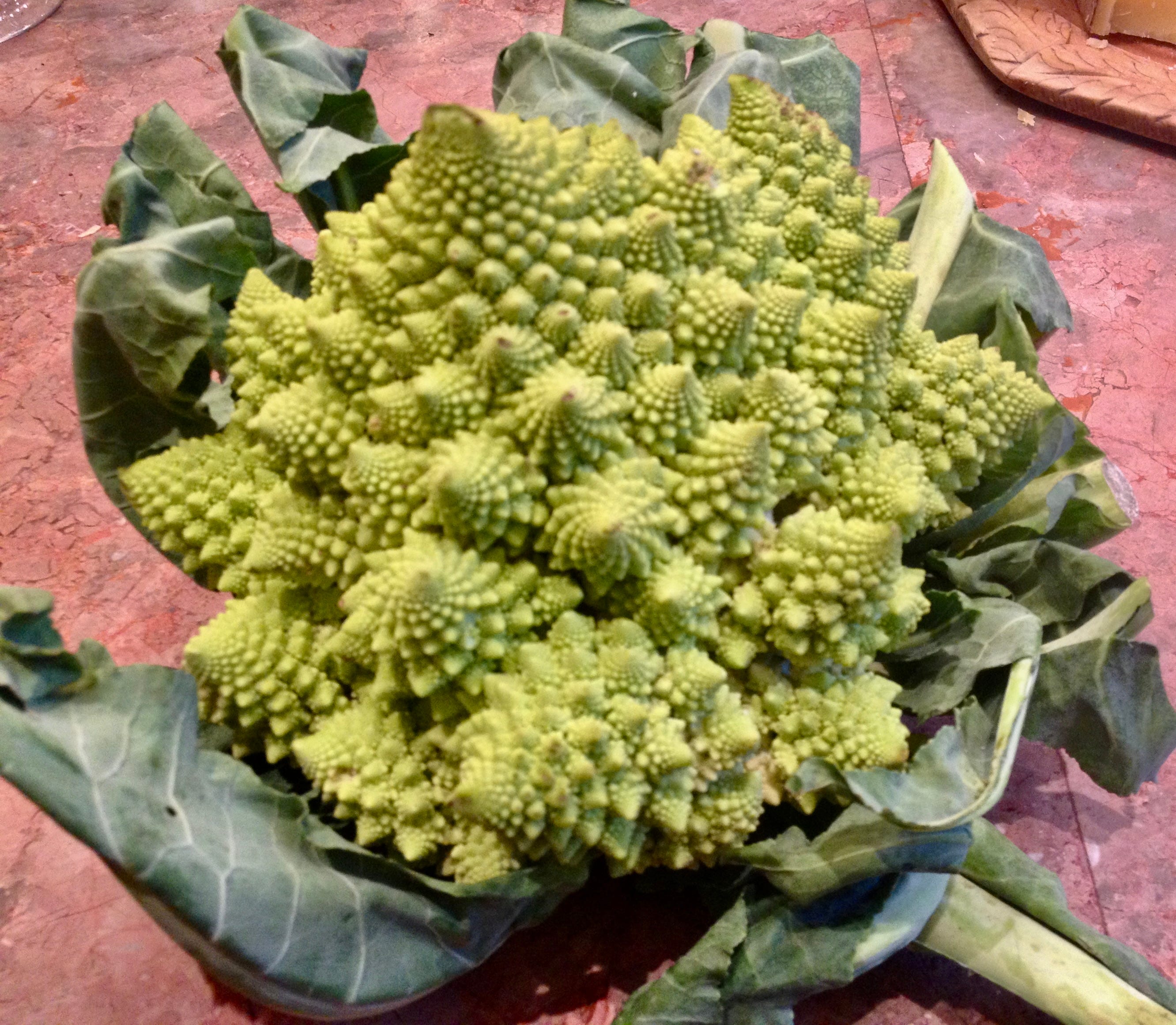
Romanesco. A brassica that looks like a collection of Thai temples on a stem.
Cocktails and Cocktail bars. There have long been a select few in Paris. Now, they dot the landscape, and many restaurants offer them.
Non-alcoholic wines and beers.
Vegetarian offerings on menu.
Vegan restaurants.
Plat du jour. Wait. This isn’t a trend but a tradition, and the most familiar dishes included on a classic plat du jour, dish of the day, selection include those from grandmère’s kitchen. While bobun and burgers, bibimap and sushi are everywhere, increasingly diners and chefs are returning to boeuf bourguignon, hachis parmentier, poule au pot, blanquette de veau and more.
In thinking of a dish that would be coherent with this note, I choose Hachis Parmentier, the iconic dish from school cafeteria to Michelin starred restaurant, truly the creation of its maker.
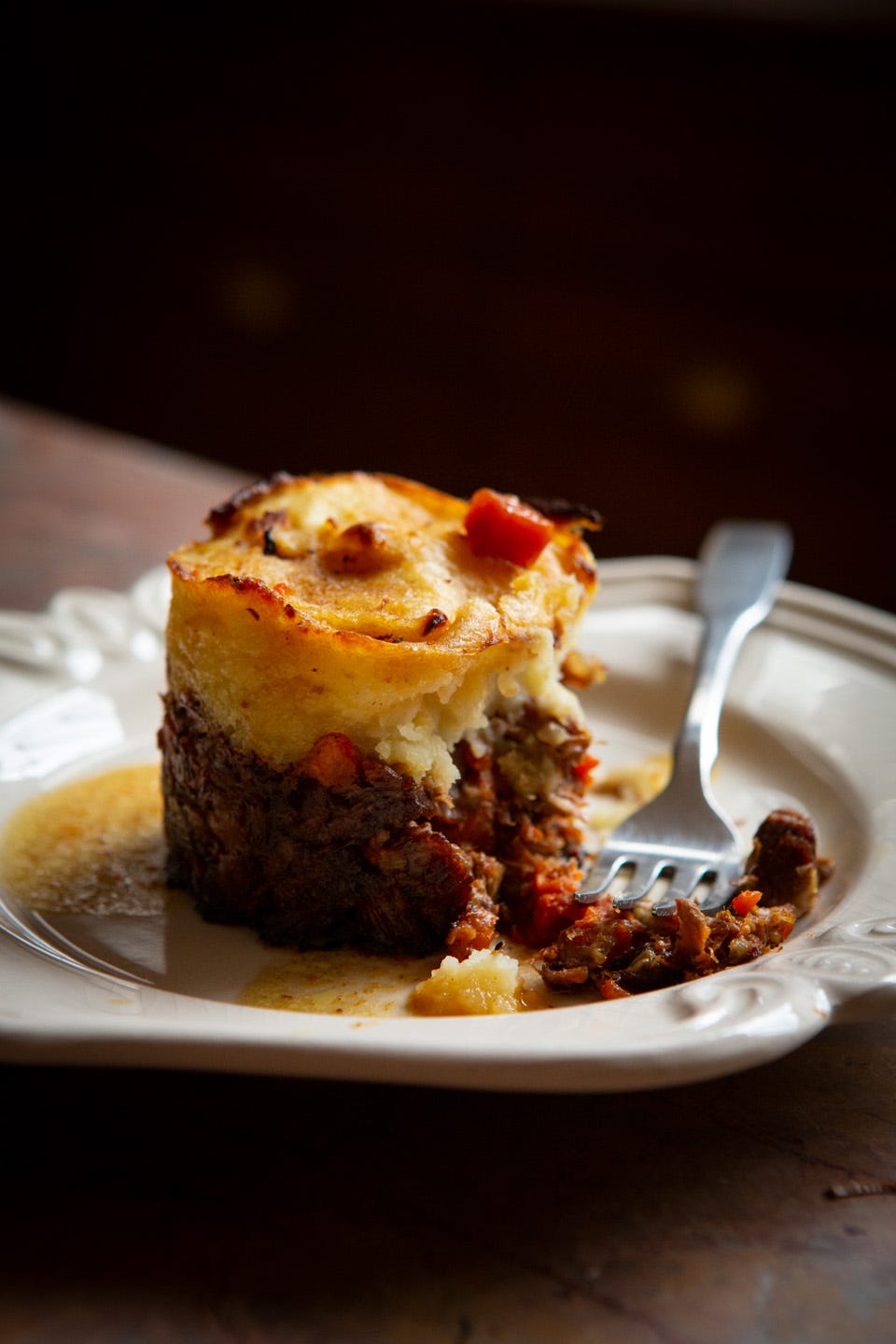
HACHIS PARMENTIER
Here, I make it with lamb, cooked expressly for this purpose. This dish can be made with any meat you like, and even with leftover meat.
One 2-pound (1kg) lamb shoulder, boned, with bones if possible
1 to 2 tablespoons olive oil
Fine sea salt and freshly ground black pepper
4 medium (3 ounces;90g each) carrots, peeled and diced
2 medium (5ounces;150g each) onions, diced
½ celery stalk, strings removed, diced
10 branches fresh thyme
2 fresh or dried, imported bay leaves
4 cloves garlic
One recipe for Mashed Potatoes (see recipe)
1. Cut the lamb shoulder into 1-inch (2.5cm) pieces. Heat the oil in a large, heavy-bottomed saucepan over medium-high heat, and when the oil is hot, add the meat, season lightly with salt and pepper, and brown on all sides. This will take 5 to 7 minutes. Remove the lamb from the pan and add the vegetables. Cook, stirring occasionally, until the onions are translucent, which will take about 8 minutes.
2. Preheat the oven to 325F (163C).
3. Return the lamb to the pan and stir. Add the thyme, bay leaves, and the garlic cloves to the meat and vegetables, along with the shoulder bone(s), and enough water to cover. When the water comes to a boil, remove it from the heat, cover, and place the pot in the center of the oven. Bake until the lamb and the vegetables are very tender, stirring occasionally, for about 2 hours.
4. When the lamb is cooked through and very tender, remove it from the oven. When it is cool enough to handle, go through the pieces of lamb with your fingers, shredding them and removing any bones and herbs.
5. Place a strainer over a bowl, and tip the lamb into it, to drain. Keep the juices, which you will transfer to a small saucepan.
6. Increase the oven temperature to 450F (235C).
7. Line the metal rounds with parchment paper. Trim the paper so that it is flush with the edges of the round. Set the rounds on the prepared baking sheet. Place ¾ cup (180g) of the lamb and vegetable mixture inside each round and press on it firmly. Top each round with half cup of mashed potatoes, pressing it gently into the lamb and smoothing the edges. The potatoes will rise above the edge of the metal rounds.
8. Place the baking sheet with the rounds in the center of the oven. Bake until the potatoes begin to turn golden on top and the meat and potatoes are hot through, which will take about 15 minutes.
9. Heat any sauces from the lamb over low heat.
10. Remove the rounds from the oven. Using a metal spatula, slide it under each round and transfer to the center of a warmed dinner plate. Carefully remove the rounds by pulling up on them. Surround each “hachis” with sauce, evenly dividing it among the plates. Serve immediately.
6 servings
Chicken wings discarded? Not even used to enrich chicken stock?
Thank you for highlighting the best of Paris! Every generation passes on their version to keep the cuisine current! Bravissimo!