
Classical French Culinary Training Shows
Ayahuma Restaurant in Paris

I was invited to a little restaurant tucked away near the Bastille, in the Charonne neighborhood, called Ayahuma Restaurant, which bills itself as Latin American. It is, more specifically, Ecuadorian and since I know little about the country’s food, the adventure appealed.
It’s a small spot on a forgotten street, easy to walk past. But once inside, the story changes. Decorated in beautiful sunset hues against ancient stone walls, with touches of vivid color and Ecuadorian artifacts artfully placed in the contemporary design, the restaurant is esthetically pleasing and spare. The welcome, on the other hand, is so warm it is like being invited in by the universal mother, owner, Maria Rodriguez, native of Guyaquil. She and her chef husband Javier Armijos, who hails originally from Quito, have clearly invested their heart, soul, and skill in the establishment.
The menu is simple and intriguing, with translations that evoke rather than entirely clarify, which adds to the adventure and sense of authenticity. Muchinos de Manioc were delicate little rolls of yuca filled with an ethereal cheese sauce and garnished with touches of pepper puree; the Llapingachos de Papa turned out to be savory pulled pork on a the most delicate and tender potato cake, with a richly flavored agrio underscored with bitter orange; the Ceviche was small squares of perfectly seasoned and lime-y salmon, with plantain chips and glittering salmon eggs as garnish. And the Guyaco Goloso, Ecuadorian chocolate mousse on a bed of caramel-like dulce de leche was, in the vernacular, “trop, trop bon”!
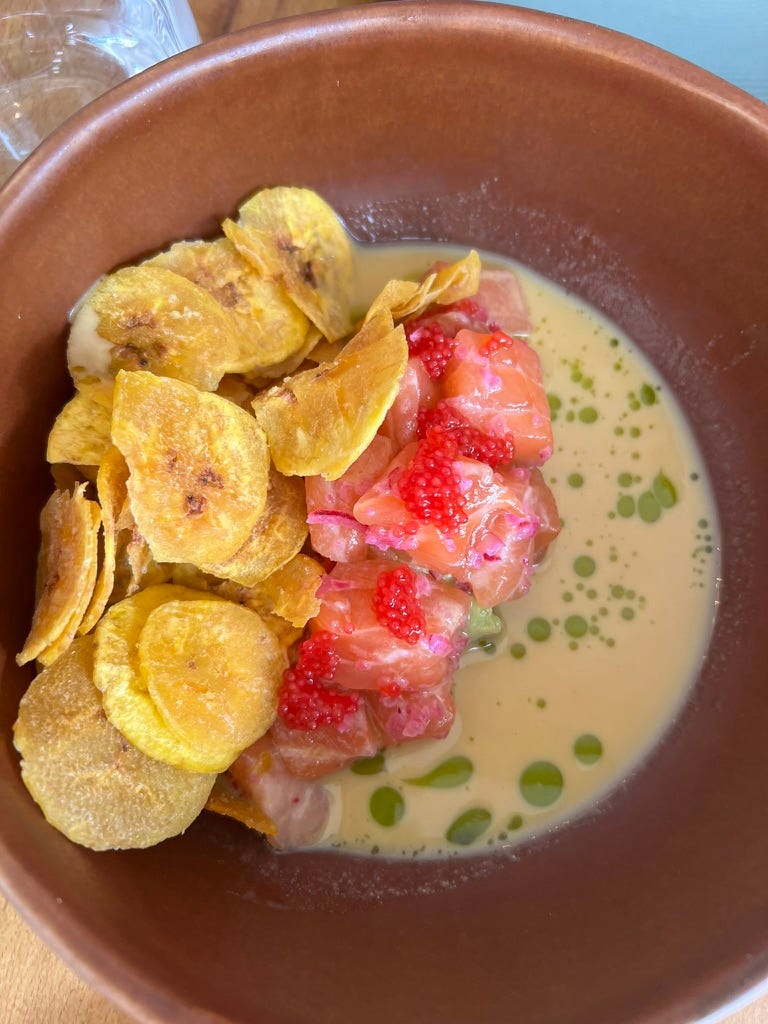
What astonished me about each dish was its sophistication, the delicacy of flavor combinations, the musicality of acid to sweet, strength to softness, crisp to tender. I hadn’t expected food so sophisticated, so artfully presented, so harmonious in flavor that each preparation floated just slightly off the plate. Nor had I anticipated such pride and warmth of service.
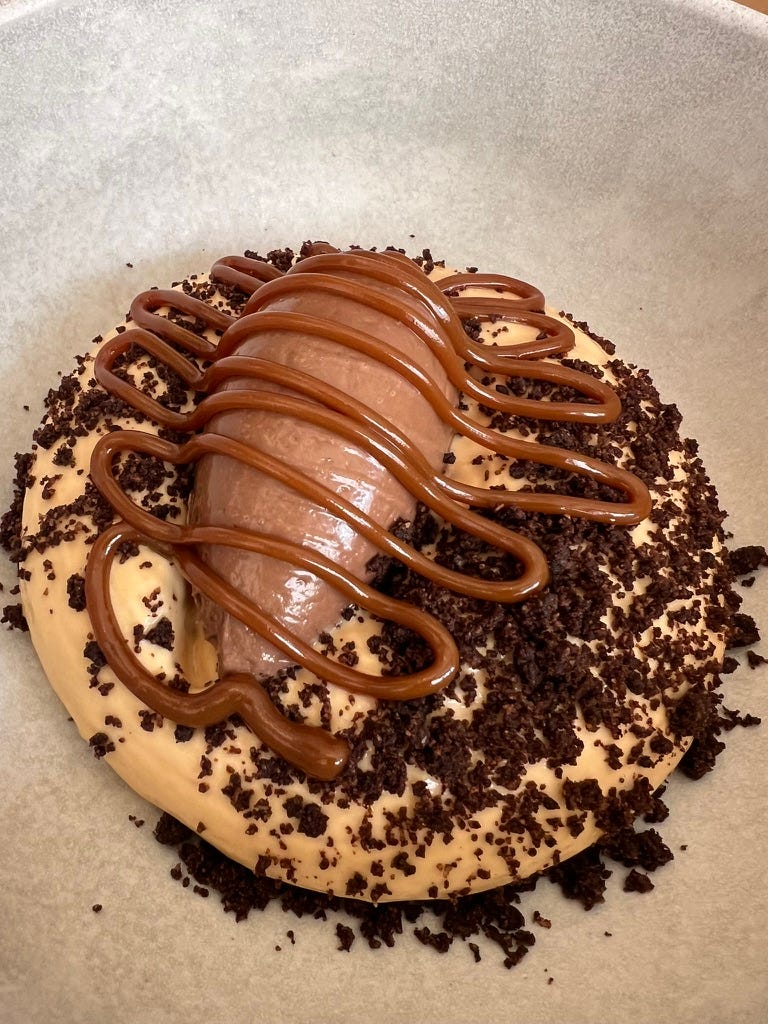
I thought, as I made my way home, there had to be classical training involved. The dishes hearkened to the rural foods of Latin America which must be simple and rustic like most rural foods; the execution, though, was in the clouds, achieved only through profound knowledge, experience, technique.
It turns out that Chef Armijos trained in Madrid then went on to work in Michelin starred restaurants before he and Rodriguez opened Ayahuma. My hunch was correct. Layers of learning and experience always lead to layers of flavor and delight on the plate.
The thing is, classical training in any métier makes the difference. I refer to my own classic culinary education every time I step into the kitchen to prepare a meal or a class. It allows me to use and give the tips and tricks, the knowledge and experience that I know make life easier in the kitchen, food tastier and more interesting on the plate. Once you’ve got classical training you can move along, never forgetting it yet letting it allow for spontaneity, imagination, creativity.
Who knew that a little haven of Ecuadorian perfection lay hidden on a street in a neighborhood that is rife with, and sometimes chaotically so, restaurants serving cuisines from the world at large? Sometimes, when I visit rue de Charonne and the larger Bastille area I wonder where French Paris went. And then I sit at a table like the one at Ayahuma. What beauty classical French training gives to any cuisine, for it adheres to the perfection that characterizes so much of French art and craft.
I, for one, will return to Ayahuma. There is much on that beautiful menu still to try.
Ayahuma Restaurant, 74 rue Leon Frot, 75011 PARIS 09 73 26 23 28
And the classical journalism training in your background shows in how beautifully you describe all things culinary!